How Did We Get Here? 9 Things You Didn’t Know About Roots Told Through Tweets and YouTube
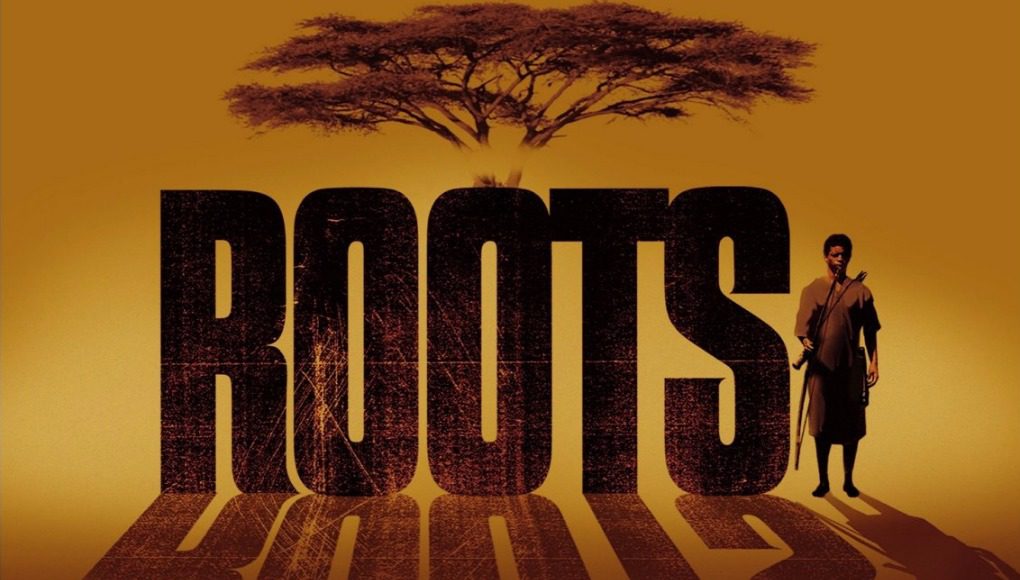
In 1976, writer Alex Haley distributed Roots, a sweeping saga that celebrated his ancestral heritage, tracing his lineage to his African ancestor, Kunta Kinte. Kunta turned into the first in Haley’s own circle of relatives to be enslaved in America. In 1977, the book became a miniseries which aired on ABC. It has become a cultural event. A whopping one hundred thirty million Americans watched part or all eight broadcasts of the series, and eighty million watched the encore. If you take into account the truth that during 1977, the entire population in the United States was approximately 230 million people, then that means approximately 1/2 of the people in this country watched at least a few parts of the miniseries. It became remarkable and opened the door in lots of ways for people of all races to start acknowledging the horrors and atrocities of the Transatlantic slave exchange.
Once you really watch it, it seems astonishing. The originial Roots prosecutes white watchers in a unrelenting, unwavering way, showing that the whole nation was complicit during this horror, which tore native individuals from one continent and relocated them in another, removing language and religion and ritual and replace it with the practices of oppressors, then demand that they gracefully settle for slavery as a reality of life, or worse, as an unavoidable truth, or more regrettable, as the sign of an outsider Christian god’s will.


The whole presentation is spotted with snapshots of viciousness and savagery, as well as beatings, whippings, lynchings, and forced sexual relationships between feminine slaves and their white bosses. Not to mention, the separation of families whose members are sold off to completely different masters.
The goal of Roots is to affirm the participated trauma of generations of blacks and make whites who had never truly considered the instinctive reality of it feel at least some small part of its sting.
For several white viewers, the mini-series made them identify with cultural experiences that were alien to them. By looking at Kunta and his fellow slaves struggle to be free and to see a society which had no compelling reason to change its ways, it was simply unimaginable.
In 2016, the History Channel aired a remake of Roots. It is a commendable resurrection of the first adventure, and it demonstrates exactly why slave stories and ones that have helped shape our set of experiences and our nation are so significant. Roots: The Complete Original Series and the updated 2016 version are on Blu-ray and DVD.
Here are 9 things you probably didn’t know about Roots.
1. Roots was originally titled, “Before This Anger”.
African-Americans have been profoundly mistreated in the United States. Therefore, PTSD and anger from this oppression has been ingrained into Black Culture. Subsequently, Alex Haley’s unique title was fitting. Initially, Haley set off on a mission to write a story about growing up in the 1920’s and ’30s in the South. However, he found that his story stretched across generations and continents. As a result, Roots was born.
2. The Roots miniseries started being filmed before Haley even completed the novel.
By the time Haley completed the book, screenwriters had been working on the tv adaption for a year. They would complete early drafts and afterward trust that Haley would let them know how it finished.
3. There aren’t any named white characters within the 1st fifty chapters of Roots.
A white character with a name doesn’t appear until the 51st chapter of Roots. His name is Massa William Waller. Toward the start of the film, the slave catchers were just called “toubob”.
4. Haley was blamed for copyright infringement.
In 1978 Village Voice journalist Philip Nobile would publish a detailed attack on Roots. He claimed that Haley made up or altered important details to fit his story. Haley indeed had to pay a $650,000.00 settlement to a man named Harold Courlander on the grounds that a few entries in Roots were like his 1967 novel, The African


.
#ROOTS was my first professional audition. I was a 19 year old Theater major, @USC when I played Kunta Kinte. pic.twitter.com/waXLFZd14L
— LeVar Burton (@levarburton) January 23, 2021
5. Gone With the Wind as the most watched televised program of all time.
In 1976, NBC had broadcasted the 1939 Civil War film Gone With the Wind over two nights. The movie held the all time televised record as a result. However, the following year, bringing in over a hundred million views, Roots smashed that record to smithereens.
6. Roots was a worldwide sensation.
The series was shown in 50 nations across the globe from 1977 to 1980. As a result, the miniseries, helped aid black freedom struggles in a few nations, and triggered public discussions on slavery in others.
7. When the original Roots aired on January 23rd 1977, an incredible 29 million households tuned in.
The audience grew as the week progressed. The eight-night run culminated in a finale that drew an audience of 36 million households, or about 100 million people. It was, at the time, the most-watched single episode of US television in history (a record broken by the M*A*S*H finale in 1983). It became a worldwide sensation, the first TV miniseries to do so.
8. LeVar Burton, the actor who played Kunta Kinte in the original Roots in 1977 could out-run O.J. Simpson.
Fun Fact: In the first take of this scene with OJ, I ignored the blocking and during the chase, at the point he was supposed to catch me, I took off. He couldn’t catch me! The director, David Greene, scolded me for wasting everyone’s time. The Juice needed a 10 min breather. pic.twitter.com/esNxPLrhJS
— LeVar Burton (@levarburton) January 23, 2021
9. Roots was a monumental television event when it aired in 1977.
The series finale set unprecedented ratings for the time and still holds the record as the second-most watched overall series finale in American television history. Roots was also met with universal acclaim, winning nine of its 37 Primetime Emmy Award nominations along with a Peabody and a Golden Globe.
Roots: The Next Generations, a sequel led by James Earl Jones, first aired in 1979, but the series didn’t feature Burton. He did however reprise the role of Kunta Kinte in 1988 for the Christmas TV movie Roots: The Gift, which also brought back Louis Gossett Jr. The movie is set between the second and third episodes of the original series.
The original Roots series was also remade in 2016 with Malachi Kirby starring as the new Kunta, joining a strong ensemble cast that also featured Forest Whitaker, Laurence Fishburne, T.I., and Anna Paquin. The series was similarly met with tremendous praise as the original, sitting at a rating of a near-perfect 98% Fresh on Rotten Tomatoes and scoring an Emmy nomination for Best Limited Series.